Jodhpur Clock Tower
Explore the iconic Ghanta Ghar in augmented reality — a heritage landmark of the Blue City
Tap to Begin
Preparing AR
Initialising camera & tracking
AR Ready
Jodhpur Clock Tower
Tap Anywhere to Place
AR Active
SLAM Locked
Play Video
Listen
i
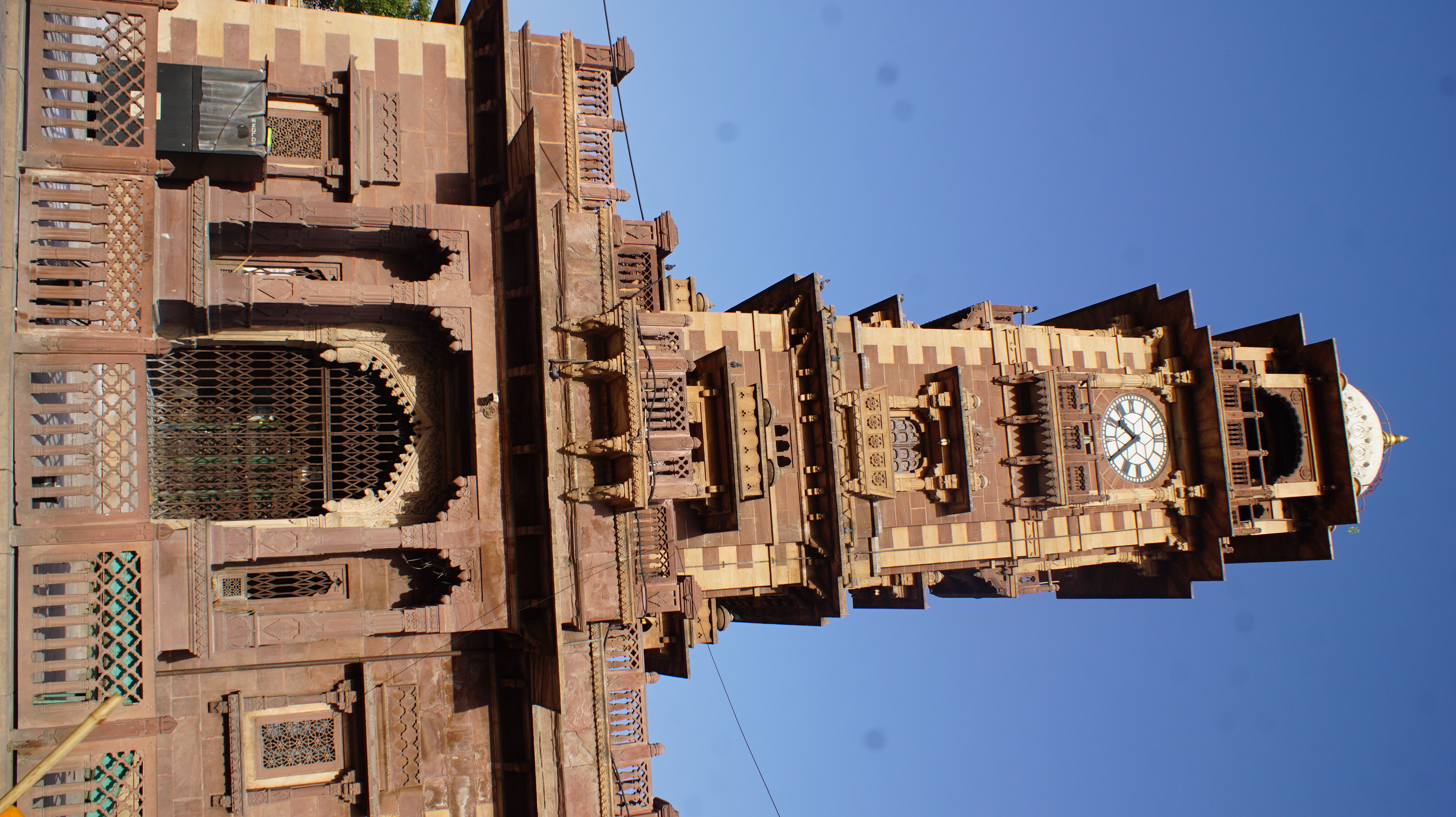
Ghanta Ghar
Heritage Jodhpur Est. 1912
Listen to the Clock Tower story
Narration by Parveen · Hindi & English blend

The Ghanta Ghar (Clock Tower) is one of the oldest and most iconic landmarks in Jodhpur, Rajasthan. Standing tall in the heart of the old city, it was built by Maharaja Sardar Singh in the early 20th century.

The tower rises prominently near the bustling Sardar Market, a vibrant bazaar known for its spices, textiles, handicrafts, and traditional Rajasthani goods. The market encircles the tower, making it the commercial and cultural hub of Jodhpur.

Jodhpur, known as the "Blue City" and the "Sun City", is the second-largest city in Rajasthan. The Clock Tower stands as a symbol of the city's rich heritage and its role as a gateway to the Thar Desert.
Sardar Market

The market surrounding the Clock Tower is famous for its narrow, colourful lanes filled with shops selling bangles, spices, tie-dye fabrics (bandhani), mojari footwear, and sweets like mawa kachori and mirchi vada. It remains one of the most photographed locations in Rajasthan.

Quick Facts
1912
Year Built
Sardar
Maharaja Singh
Blue
City of Jodhpur
Thar
Desert Gateway
Ghanta Ghar
Landmark Ghanta Ghar Clock Tower

The Ghanta Ghar (Clock Tower) is one of the oldest and most iconic landmarks in Jodhpur, Rajasthan. Built by Maharaja Sardar Singh in the early 20th century, it stands tall in the heart of the old city.

The tower rises prominently near the bustling Sardar Market, a vibrant bazaar known for its spices, textiles, handicrafts, and traditional Rajasthani goods. It remains the commercial and cultural hub of Jodhpur.

Jodhpur, known as the "Blue City" and the "Sun City", is the second-largest city in Rajasthan. The Clock Tower stands as a symbol of the city's rich heritage and its role as a gateway to the Thar Desert.
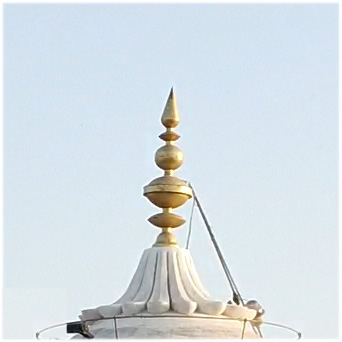
Kalash
Crowning Element Kalash finial atop the Clock Tower

The Kalash is the sacred pot-shaped finial that crowns the very top of the Clock Tower. In Indian architecture, the Kalash symbolises abundance, wisdom, and immortality.

Traditionally made of copper or brass, it represents the cosmic vessel from which creation flows. Placing a Kalash atop a structure is believed to invite divine blessings and protect the building from negative energies.

On the Ghanta Ghar, the Kalash sits above the lotus dome, completing the tower's upward progression from the earthly base to the heavenly pinnacle — a hallmark of Rajput-era craftsmanship.

Lotus Dome
Architectural Crown Lotus Dome atop the Clock Tower

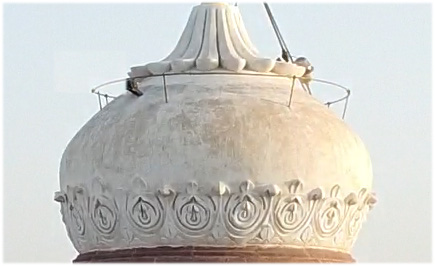
The Lotus Dome is the elegant cupola shaped like an inverted lotus flower in full bloom, sitting just below the Kalash finial. It is one of the most recognisable features of the Ghanta Ghar's silhouette.

In Indian art and architecture, the lotus (Padma) represents purity, divine beauty, and spiritual awakening. Its use atop structures symbolises the blossoming of knowledge and the connection between the earthly and the divine.

Crafted in the Rajput-Mughal hybrid style, the dome features carved stone petals radiating outward — reflecting Rajasthan's rich tradition of ornamental stone masonry.

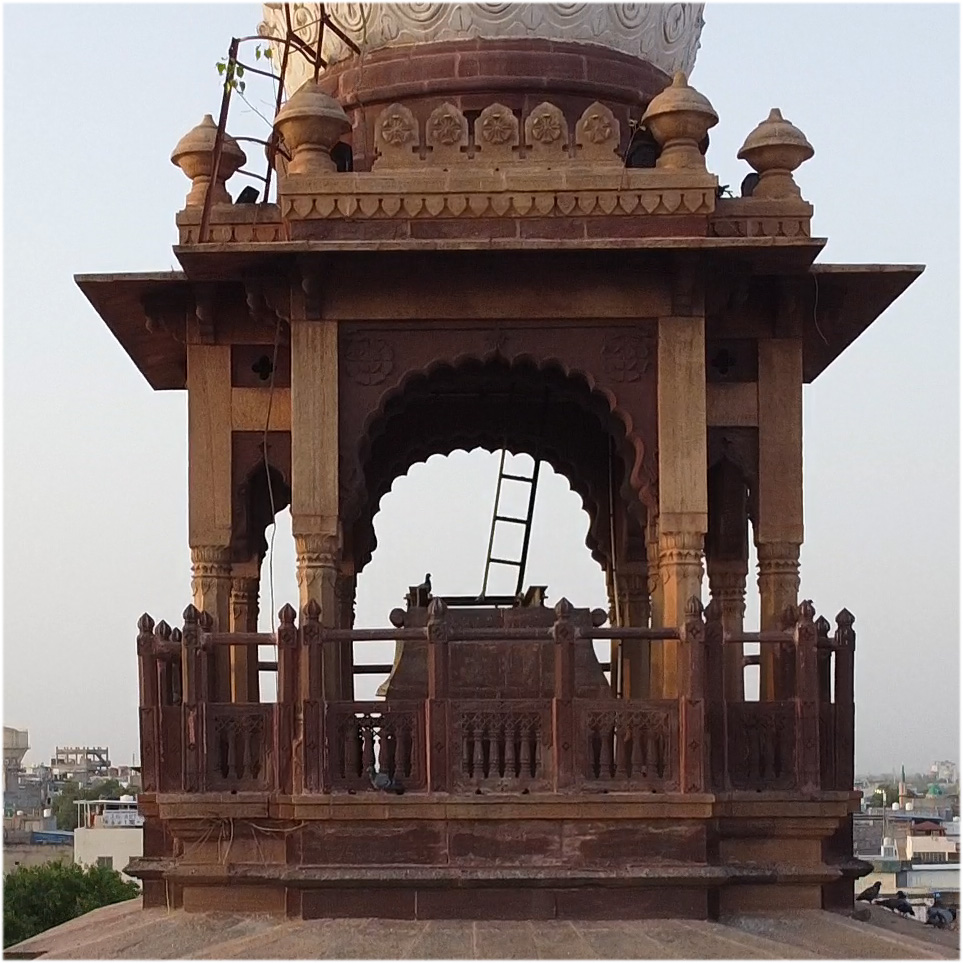
Chhatri Pavilion
Elevated Canopy Chhatri Pavilion on the tower

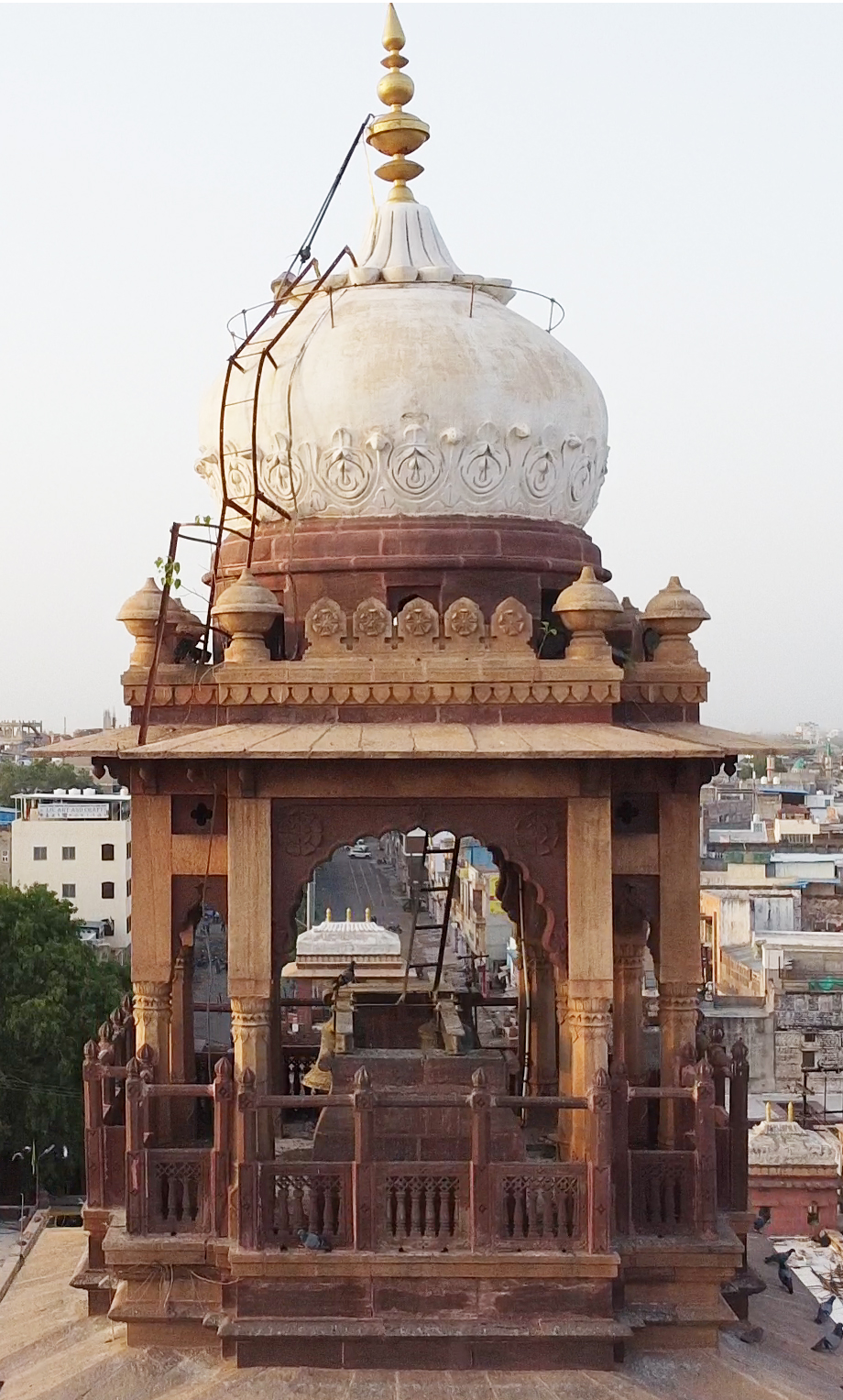
The Chhatri is an elevated, dome-shaped pavilion that appears in the upper section of the tower. The word literally means "umbrella" or "canopy" in Hindi.

In Rajasthani architecture, Chhatris serve both decorative and symbolic purposes — they represent honour, royalty, and celestial shelter. They are commonly found atop forts, palaces, and cenotaphs across Rajasthan.

The Chhatri on the Ghanta Ghar features ornate pillars and a fluted dome, offering a visual transition between the tower's sturdy base and its delicate upper finials.

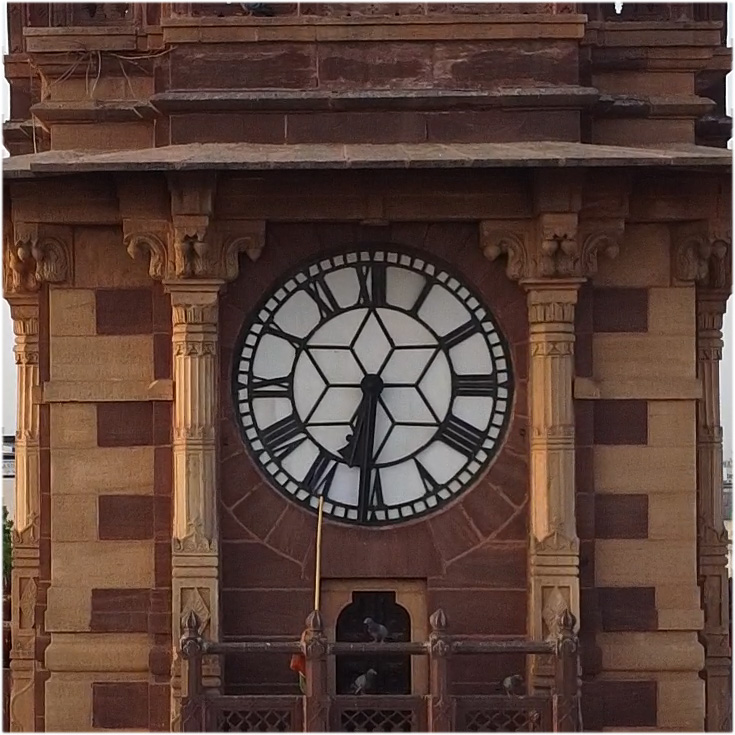
Clock Dial
Timekeeping Face Clock Dial of the Ghanta Ghar

The Clock Dial is the centrepiece of the Ghanta Ghar — the large, round face that gives the tower its name. Visible from across the old city, it has marked time for Jodhpur's residents for over a century.

The clock mechanism was originally imported from England during the British colonial period, reflecting the blend of Western technology and Indian architectural tradition that characterises many Rajasthani civic buildings of the era.

Four identical dials face the cardinal directions, ensuring the time can be read from every approach to Sardar Market.

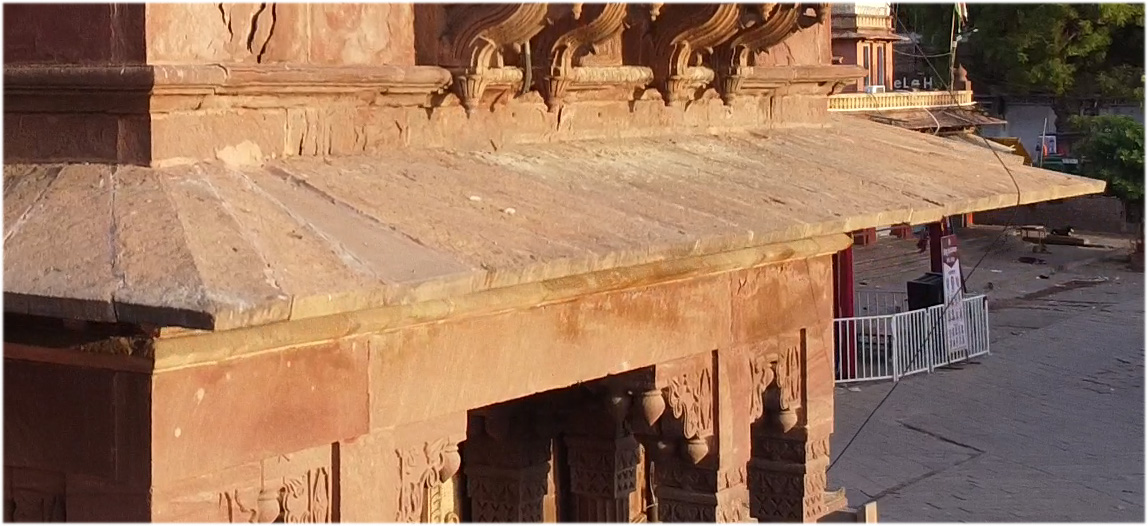
Chhajjas
Projecting Eaves Chhajjas projecting eaves on the tower

Chhajjas are the projecting eaves or cornices that extend horizontally from the tower's facade. They are a signature element of Rajasthani and Mughal architecture.

Functionally, Chhajjas provide shade and rain protection for the walls and openings below — essential in Jodhpur's intense desert sun and monsoon rains. Their overhanging design also creates dramatic shadow patterns across the facade.

On the Ghanta Ghar, the Chhajjas are carved from local sandstone with decorative mouldings, adding horizontal rhythm to the tower's vertical composition.

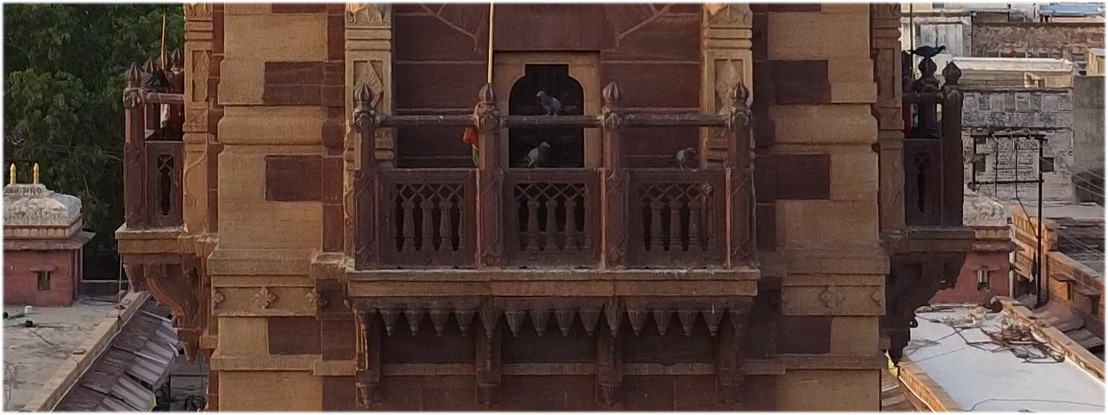
Jharokha Balconies
Overhanging Windows Jharokha Balconies on the tower

Jharokhas are the enclosed, overhanging balconies projecting from the tower's walls. They are one of the most distinctive features of Rajasthani palace architecture.

Historically, Jharokhas allowed royal women to observe street life without being seen — a practice tied to the tradition of purdah. Their latticed screens (jali) filter sunlight while allowing air flow, a natural cooling system.

On the Ghanta Ghar, the Jharokhas feature cusped arches and carved brackets, echoing the style seen at the nearby Mehrangarh Fort and Umaid Bhawan Palace.

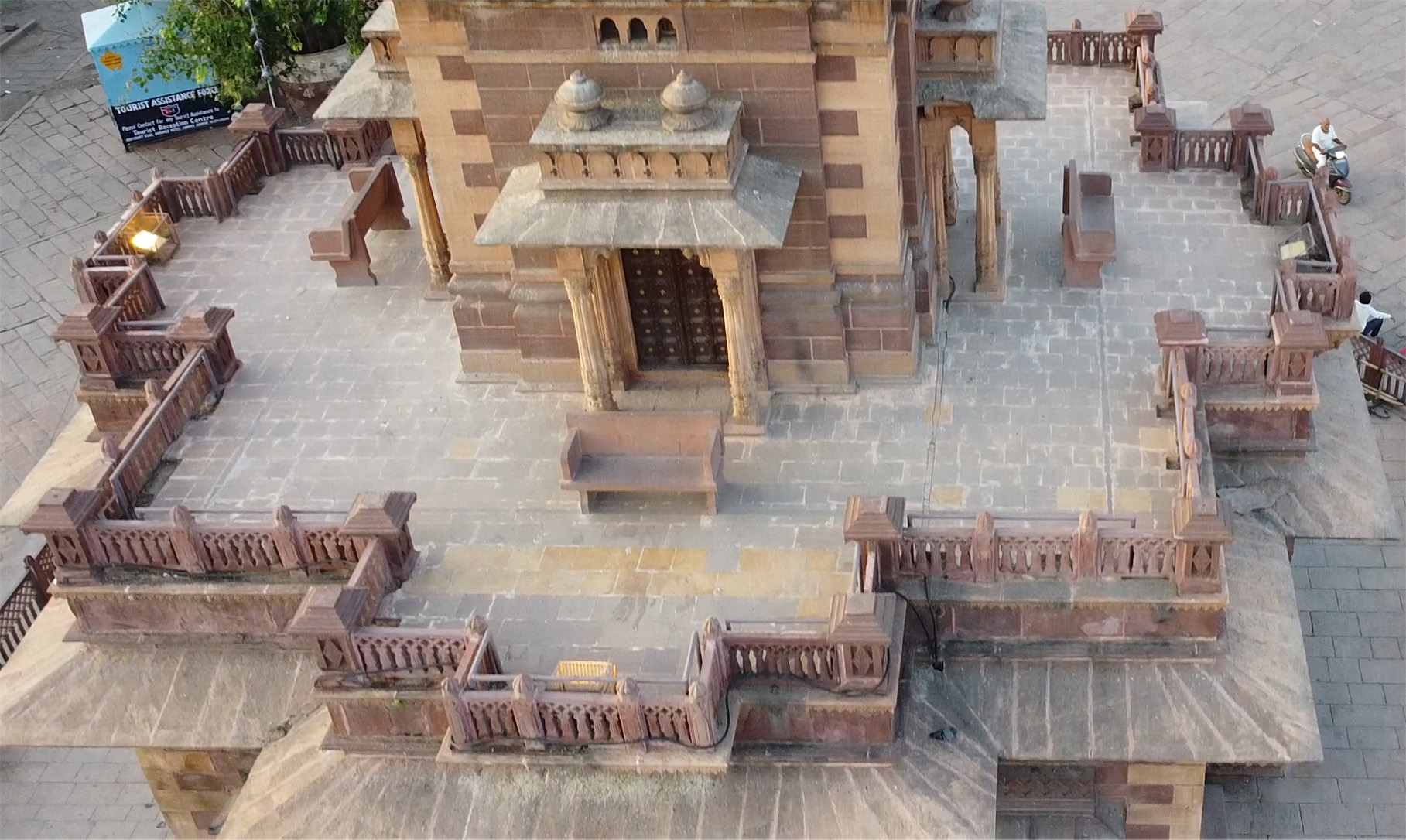
Balustraded Terrace
Open Gallery Balustraded Terrace of the tower

The Balustraded Terrace is the open gallery encircling the tower at the lower level, defined by a row of small, ornamental pillars (balusters) topped by a railing.

This terrace serves as a visual base for the upper tower, grounding its vertical thrust with a strong horizontal band. The balusters are turned from Jodhpur sandstone, each individually carved.

Architecturally, the balustrade creates a sense of accessibility and openness, inviting the eye to travel upward through the tower's ascending tiers toward the Kalash at the summit.

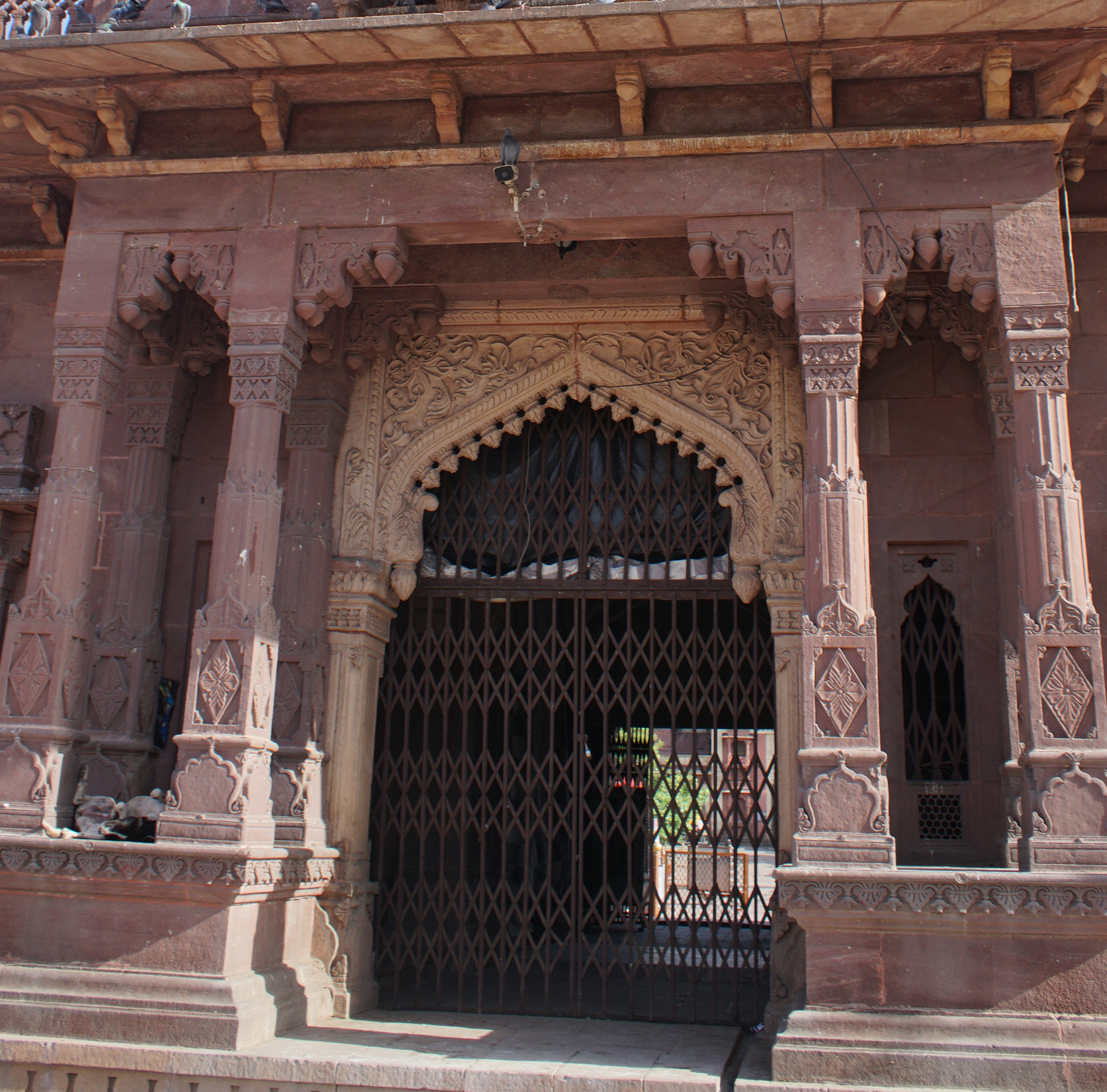
Cusped Arches
Decorative Arches Cusped Arches at the base of the tower

Cusped Arches (also called foiled arches) are the scalloped, multi-lobed arches found at the base and midsection of the tower. Each arch features a series of small curves (cusps) along its inner edge.

This arch form is a hallmark of Indo-Islamic architecture, blending Hindu temple motifs with Mughal design principles. The cusps add intricate visual texture and play of light and shadow across the facade.

On the Ghanta Ghar, the cusped arches frame the tower's lower openings, creating a grand entrance effect that draws visitors into Sardar Market.